
🧠 Yu-Gi-Oh Market Intelligence Report
What to Buy. What to Hold. What Actually Works.
Most people buy Yu-Gi-Oh cards randomly.
They open packs, chase hype, and wonder why nothing holds value.
This page shows you a different approach:
Positioning instead of guessing.
⚖️ How Value Actually Works
There are only 4 real ways to approach Yu-Gi-Oh as a market:
-
Sealed → scarcity over time
-
Complete Sets → controlled exposure
-
Singles / Packs → high risk, learning phase
- Graded Cards →some are gems, others are dangerous
If you understand these four, you stop gambling.
📦 1. Sealed Product — “Time Compression”
Sealed is the simplest—and most misunderstood—strategy in Yu-Gi-Oh.
At a basic level:
- Most packs get opened → supply disappears permanently
- The best cards become harder and harder to pull
- Fewer sealed boxes remain each year
Sealed turns time into scarcity.
🧠 Why Sealed Works
When you hold a sealed box, you’re not holding “cards.”
You’re holding:
- Every ultra rare
- Every secret rare
- Every possible outcome
You’re holding probability—not a single result.


Sealed is simple:
-
Most packs get opened → supply disappears
-
The best cards become harder to pull
-
Sealed keeps all outcomes alive
Once a box is opened:
- The upside is realized once
- The rest of the value is gone forever
But sealed?
It preserves all upside indefinitely.
🔥 Current Sealed Plays
-
Chaos Origins Booster Box
👉 https://geniusloci.app/products/preorder-ship-by-5-5-26-japanese-yu-gi-oh-ocg-chaos-origins-booster-box -
Maze of the Master Booster Box
👉 https://geniusloci.app/products/maze-of-the-master-booster-box-1st-edition-maze-of-the-master-mztm -
Limit Over Collection (Heroes)
👉 https://geniusloci.app/products/japanese-yu-gi-oh-ocg-limit-over-collection-the-heroes-booster-box -
Limit Over Special Pack Vol. 1
👉 https://geniusloci.app/products/japanese-yu-gi-oh-ocg-limit-over-special-pack-vol-1-promo-pack
💡 Sealed gains value whether or not the best card is pulled.
For most collectors we highly suggest you buy sealed products and store them away. Time in the market beats timing the market!
📈 Real Examples (What Actually Happens Over Time)
This isn’t theory—this is how the market has behaved:
-
Early sets like Legend of Blue Eyes White Dragon Booster Box
→ Originally retail ~$70–$100
→ Now worth thousands sealed -
Metal Raiders Booster Box
→ Once a standard retail product
→ Now highly scarce and collectible -
Even mid-era sealed (once considered “junk”)
→ quietly increases as supply dries up
⚖️ Sealed vs Opening Packs
Opening packs:
- High dopamine
- Low long-term consistency
Holding sealed:
- Low excitement short-term
- High asymmetry long-term
Most people choose excitement.
The market rewards restraint.
🧾 2. Complete Sets — “Control the Entire Market”
This is where most people miss.
Everyone chases:
- one card
- one pull
- one “hit”
But the stronger move is quieter:
You own everything in the set.

🧠 Why Complete Sets Work
Most early Yu-Gi-Oh sets contain ~100 cards.
Over time, something predictable happens:
- Cards get lost
- Cards get graded and removed from circulation
- Cards get damaged, destroyed, or locked into collections
This creates fragmentation.
The set slowly breaks apart.

📉 The Fragmentation Effect (This Is the Edge)
Imagine 100 people each owning pieces of a set:
- One has 10 cards
- One has 3 holos
- One has a near-complete binder
But very few people:
have all of it, together, in one place

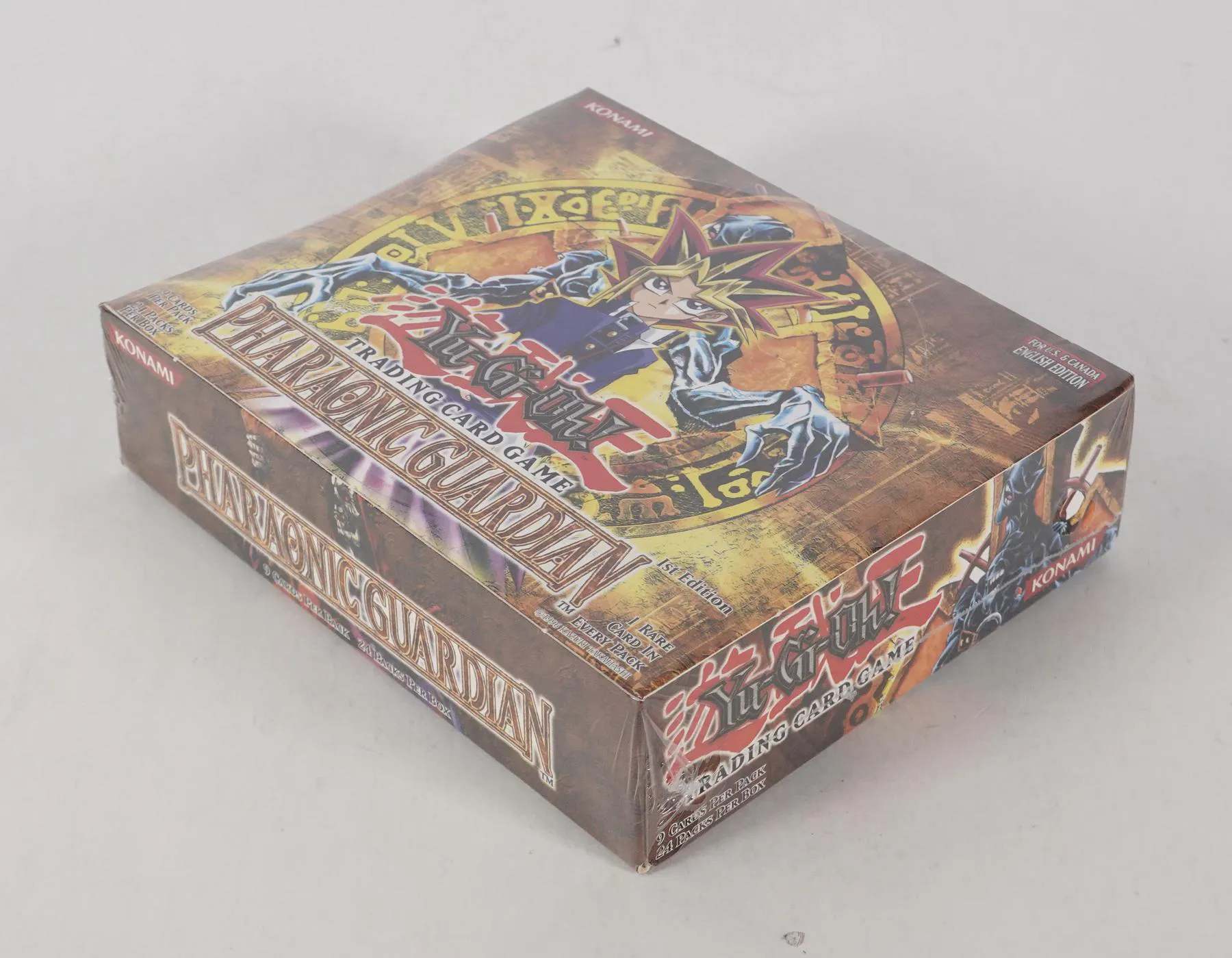
This is where most people miss.
Instead of chasing one card:
You own everything in the set.
Why it works:
-
Early sets (~100 cards) fragment over time
-
Cards get graded, lost, or held permanently and worse, destroyed.
-
Complete sets become rarer than individual cards
You’re not betting—you’re controlling supply exposure.
📚 Full Set Opportunities
-
Legacy of Darkness Complete Set
👉 https://geniusloci.app/products/yu-gi-oh-legacy-of-darkness-complete-set-lod-000-100-injection-fairy-lily -
Pharaonic Guardian Complete Set
👉 https://geniusloci.app/products/yu-gi-oh-1st-edition-pharaonic-guardian-complete-set-pgd-000-107 -
Labyrinth of Nightmare Complete Set
👉 https://geniusloci.app/products/yu-gi-oh-labyrinth-of-nightmare-complete-set-lon-000-104-magic-cylinder
💡 You’re owning the ecosystem—not a single outcome.
📈 Real Example Thinking
Take early-era cards like:
- Injection Fairy Lily (Legacy of Darkness)
- Magic Cylinder (Labyrinth of Nightmare)
These cards:
- Get graded
- Get separated
- Get sold individually
Which means:
The complete set they came from becomes harder to assemble every year.
💰 3. Entry Strategy — “Learn the Market First”
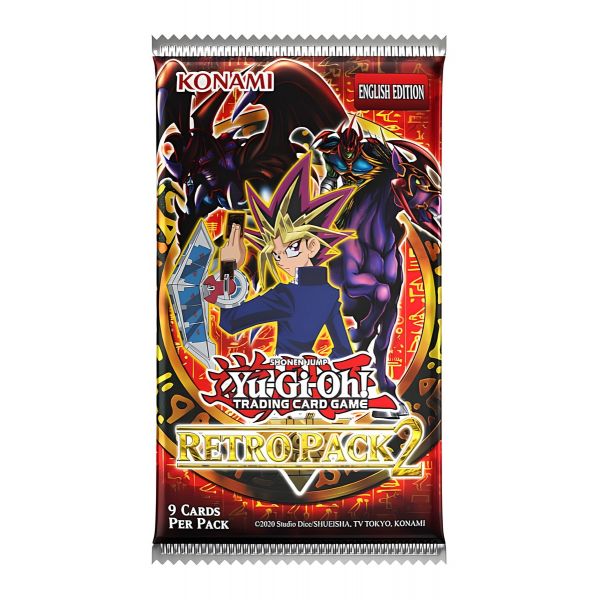

If you’re starting, the goal is not to win.
The goal is to understand the system.
🧠 Why Start Small
Most people jump in like this:
- Buy a box
- Chase one card
- Get random results
- Lose confidence
A better approach:
Start small. Observe. Then scale.
🎯 What Entry Packs Are Actually For
A single pack isn’t a strategy.
It’s a learning tool.
When you open or hold small amounts, you begin to see:
- How rarity distribution works
- What actually comes out of sets
- Which cards feel common vs scarce
- How value is spread across a release
You’re building pattern recognition.
📦 Example Entry Point
-
Burst Protocol Booster Pack
👉 https://geniusloci.app/products/yu-gi-oh-tcg-burst-protocol-booster-pack-konami-official
Use this to:
- Get exposure to a set
- Understand card quality and pull structure
- Decide if the set is worth going deeper into
🔍 Testing Before Committing
This is where this strategy becomes powerful.
Instead of blindly buying a box or chasing singles:
You can:
- Open or review a few packs
- Study the card pool
-
Identify:
- Are there strong chase cards?
- Is the set overprinted?
- Does it feel collectible or disposable?
Then decide:
“Is this a set I want to own sealed… or even complete?”
⚖️ The Honest Reality (Important)
Over time:
Serious collectors do not rely on single packs.
Why?
- Packs are inconsistent
- Pull rates are unpredictable
- Most value is concentrated in very few cards
The only exceptions tend to be:
- Tournament packs
- Championship / limited-distribution packs
- Truly scarce sealed formats
⏳ Evolution of a Collector
Most people follow this path (whether they realize it or not):
- Packs → curiosity
- Singles → targeting
- Sealed / Sets → positioning
The mistake is staying stuck at step 1.
🧩 Where This Fits in Your Strategy
Use entry packs to:
- Learn the structure
- Understand releases
- Test your interest in a set
Then move into:
- Sealed (long-term holds)
- Complete sets (controlled exposure)
💡 Key Principle
Use small buys to understand the system—then scale with intention.
🏆 4. Graded Cards — “Some Are Gems. Others Are Dangerous.”

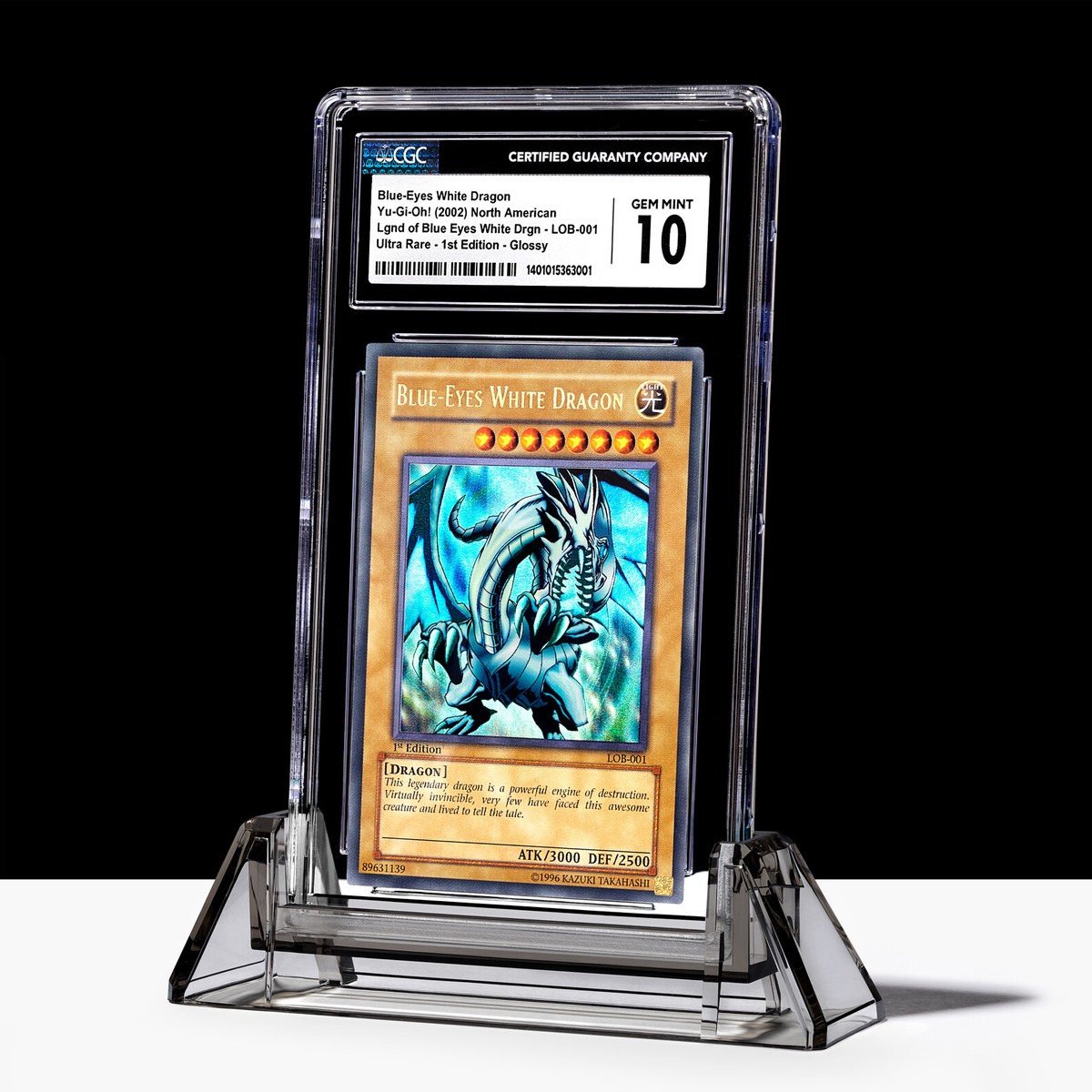
Graded cards look like the endgame.
Clean slab. Perfect condition. High price.
But this is where things get subtle:
Not all graded cards are equal.
Some are elite long-term holds.
Others are overpriced traps.
🧠 What Grading Actually Does
Grading takes a raw card and:
-
Verifies authenticity
-
Assigns condition (1–10 scale)
-
Encases it permanently
This creates:
-
Trust
-
Standardization
-
Liquidity
A graded card is easier to buy, sell, and compare.
💎 When Graded Cards Are Strong
Graded cards work best when all three align:
1. Iconic Card
-
Blue-Eyes White Dragon
-
Dark Magician
-
Early-era staples
2. True Scarcity
-
Older sets
-
Low surviving population
-
Hard-to-grade condition
3. High Grade (9–10)
-
PSA 10 / BGS 9.5+
When these line up:
You get a true collectible asset
📈 Example Thinking
A card like:
-
Blue-Eyes White Dragon
In PSA 10:
-
Extremely hard to achieve
-
Limited population
-
Consistently in demand
Compare that to:
-
A modern PSA 10 from a recent set
→ High supply
→ Easy to grade
→ Lower long-term pressure
⚠️ Where People Go Wrong
This is where graded becomes dangerous.
People assume:
“PSA 10 = valuable”
But reality:
-
Many modern cards have huge PSA 10 populations
-
Grading has become more common
-
Supply can overwhelm demand
A perfect card is not rare if thousands exist.
📉 The Population Trap
Every graded card has a population count:
-
How many PSA 10s exist
-
How many PSA 9s exist
If population is high:
→ Price pressure increases
→ Upside decreases
⚖️ Graded vs Raw vs Sealed
Each has a different role:
-
Graded → precision + condition premium
-
Raw → flexibility + opportunity
-
Sealed → time-based scarcity
Graded is the most “finished” form of value.
🧩 How to Approach Graded Cards
If you’re starting:
-
Avoid chasing random PSA 10s
-
Focus on learning:
-
Set history
-
card significance
-
population reports
-
If you’re scaling:
-
Target:
-
Iconic cards
-
Early sets
-
Low population grades
-
💡 Key Principle
Grade does not create value.
It reveals it.
⚠️ One Honest Note
Graded cards are:
-
Higher entry cost
-
Less forgiving if you overpay
-
More dependent on market knowledge
But when chosen correctly:
They represent some of the cleanest, most refined assets in the hobby.
Final Thought
Graded cards look simple.
But they require the most judgment.
Some are permanent pieces.
Others are just plastic around a common card.
Knowing the difference is where the edge is.
⚠️ What Most People Get Wrong

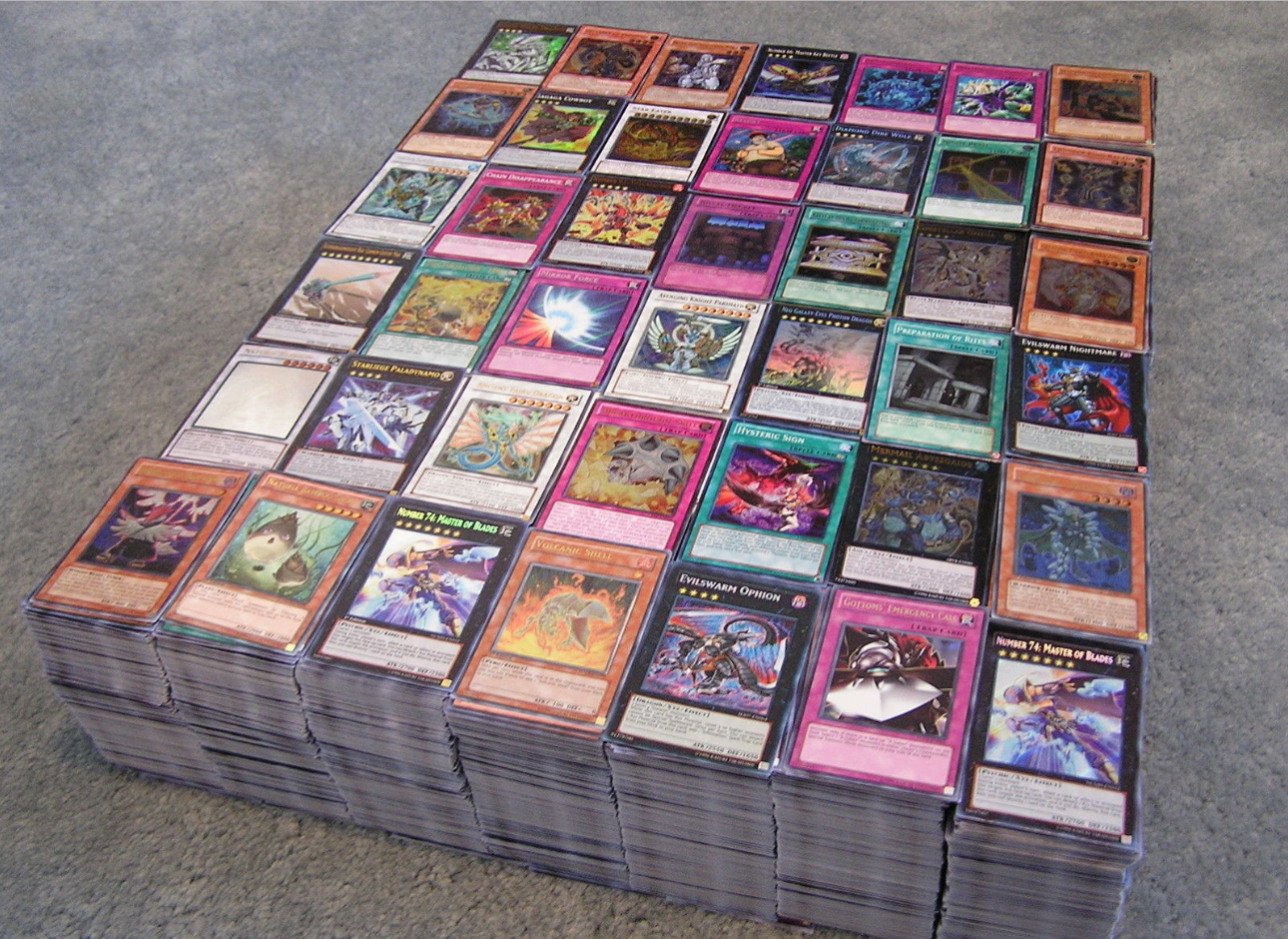

Avoid:
-
Overprinted modern sets
-
Hype-driven cards
-
Random bulk lots
Scarcity beats hype. Every time.
🧠 Strategy Summary
If you want a simple framework:
-
Sealed → long-term hold
-
Sets → structured positioning
-
Packs → learning / optional upside
- Graded → cleanest, most refined assets in the hobby.
🔁 Where to Go Next
-
🛒 Browse all products → https://geniusloci.app
-
💰 Additional deals → https://www.ebay.com/usr/genius_loci
-
🧠 More breakdowns → Knowledge Hub
Final Thought
Yu-Gi-Oh isn’t just a card game.
It’s a market.
Most people participate randomly.
You don’t have to.